
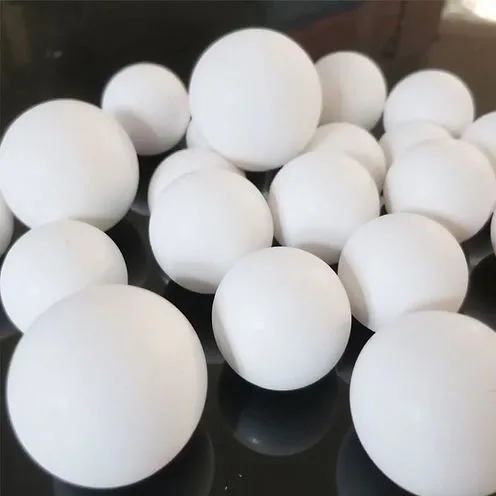
New tech and lab work keep us looking for better materials each day. Teams always need reliable parts for very specific jobs. Oftentimes, engineers and researchers will use a combination of materials that possess different sets of properties to get the desired results instead of using conventional metals or plastics. Alumina Spheres and Nitinol Strip are two materials that have distinct uses, but are key to innovation in science and engineering. They are valuable for their individual strengths in laboratory, product development or advanced research projects.
Understanding the Role of Each Material
All of the advanced materials are chosen for their particular benefits. Alumina ceramics are well known for their hardness, heat stability and wear and corrosion resistance. With these properties, Alumina Spheres are appropriate for long-lasting and reliable applications.
These nickel-titanium alloy strips are manufactured into Nitinol Strip, which has shape memory and superelastic properties. Its flat shape also makes it ideal for precision manufacturing, prototyping and other special engineering applications.
These materials are distinct, but can be used for research projects that involve several material properties.
Why Advanced Research Depends on Specialized Materials
In modern research, there are often conditions where conventional materials are not able to provide the desired level of performance. Parts must stay strong when you test them. This is true under hard physical stress or in super hot heat.
Alumina Spheres are widely used in laboratory grinding and material preparing processes because they are used for maintaining the quality of laboratory samples, and they have a good anti-wear property. Nitinol Strip facilitates research on smart materials, flexible components and innovative mechanical designs.
These materials are used in combination to give experiments that require accuracy and repeatable results.
Common Research Applications
While some industrial applications make use of advanced materials in a variety of ways, many research environments take advantage of the special properties of advanced materials.
Common applications are:
-
University laboratories
-
Materials science research
-
Aerospace development
-
Medical technology research
-
Robotics and automation
-
Precision engineering projects
Researchers select the materials for the project depending on the technical objectives of the project and not on the standard materials available to the project.
Factors to Consider During Material Selection
Making the correct choice of material is more than just about knowing basic material properties. The ability of the material to perform under real operating conditions also needs to be assessed by the researchers.
Some of the factors that should be taken into account are temperature resistance, mechanical loading, corrosion resistance, dimension requirements and manufacturing processes. These are two clear ways different items solve tough jobs. In grinding, folks pick alumina spheres because they last a long time. For tasks that need high bend and smart movement, nitinol strip is the right pick.
Technical specifications are examined prior to procurement to help ensure the materials are in line with the goals of the research program.
Supporting Innovation Through Collaboration
Close interactions between scientists and engineers and material suppliers can be essential for successful research. The ability to access technical documentation and expertise to answer questions during project planning and selection of materials supports research teams.
There are experienced suppliers who can guide you on the product form, manufacturing capabilities and material properties. This is particularly beneficial when making a prototype or using specialized experimental equipment.
Good communication also enables researchers to find suitable solutions as project requirements change throughout the course of the project.
Looking Ahead to Future Technologies
With the continued advancement of product and technology development in various industries, the need for advanced materials will persist. New materials are continually being investigated for higher efficiency, durability and performance.
Alumina spheres and nitinol strips help push this work forward. These unique traits help simplify key steps in lab tests as well as full design builds. They are currently used regularly in laboratories and research institutes, highlighting the significance of choosing a material that can meet the technical needs of current innovations.
Conclusion
Alumina spheres and nitinol strips help teams do great new science. Each material brings unique perks to hard lab projects. Site regmetals.com offers clear facts for groups that need tough ceramics or nickel-titanium metals for real builds, plant jobs and product tests. When you see how these parts work in each test step, it is easier to pick what fits and build reliable setups. Talk with a true material pro before you buy stuff for your next big project.